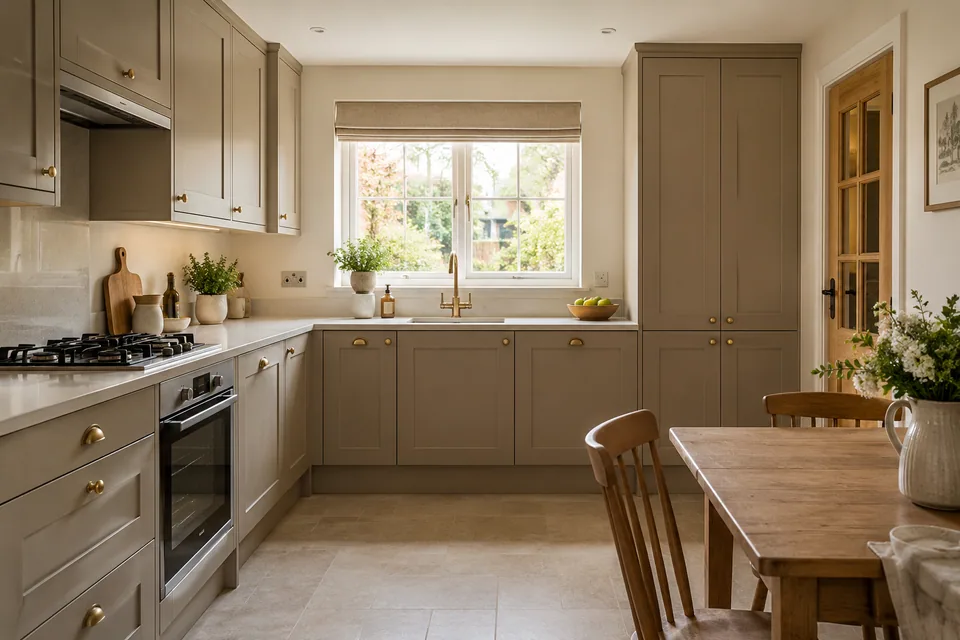
Decide whether the problem is the look or the layout
Replacing kitchen doors can make sense when the cupboards are sound, the storage works and you are mainly tired of the appearance. A complete replacement gives more freedom to change cupboard sizes, drawers and appliance positions. Start with what needs to improve, rather than assuming either option is always better value.
Walk through an ordinary meal in the current kitchen. If you have enough worktop and can reach the things you need, a change of fronts may address the main frustration. If the room feels cramped, the sink is awkward or the storage is difficult, new doors will leave those problems where they are.
This article compares the choices; it does not promise that every door-only job is suitable or offered. Ask about your room and the work required. Our Glasgow kitchen installation page explains the full design, supply and fitting service.
Check the cupboards behind the doors
The cupboard bodies, behind the doors, need to be secure, straight and in suitable condition before you spend money changing the fronts. Look for swollen board around the sink, loose hinge or shelf fixings, badly damaged shelves and drawers that no longer run properly. A new door may cover a mark, but it does not repair the cupboard behind it.
Check the source of any damp or damage as well. Replacing a panel without dealing with the cause can leave the same problem waiting to happen again. A fitter can discuss what is visible, while recognising that some areas remain hidden until parts are removed. Do not assume a photograph alone proves the whole kitchen is sound.
Keeping useful cupboards can avoid unnecessary replacement, but there is little benefit in fitting fresh doors to units already near the end of their useful life. Compare the likely finished result and the work needed to get there, rather than comparing the price of the doors with the price of an entire kitchen.
Door sizes and hinge positions have to match
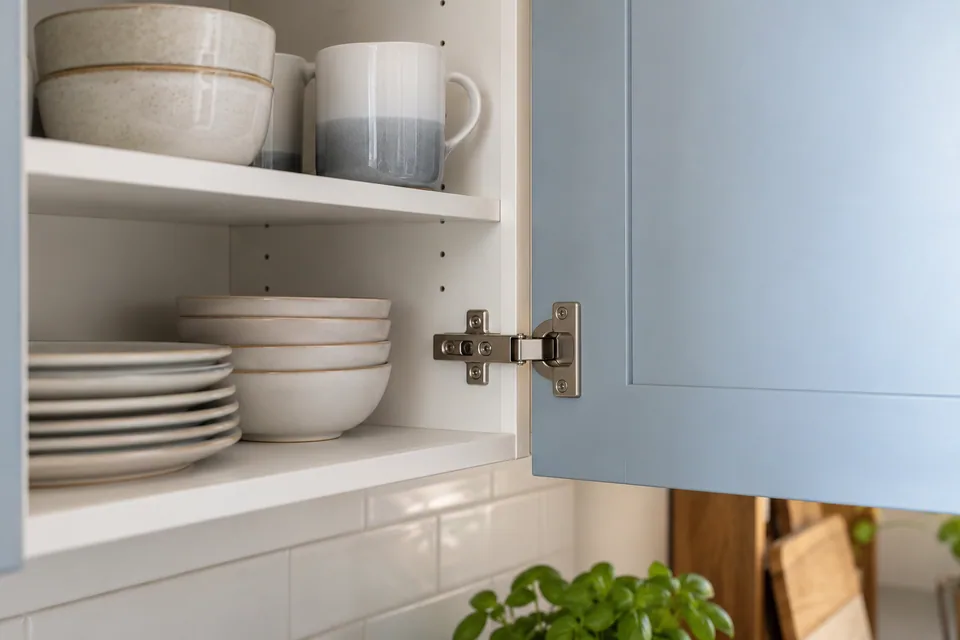
A replacement front needs more than a similar colour and approximate width. Height, thickness, hinge positions, the opening direction and the gap beside adjoining fronts all matter. Integrated appliances can have their own fixing and opening requirements. A door described as a standard size is not automatically compatible with every old kitchen.
Replacement-door supplier Hot Doors notes that hinge positions can vary between kitchen ranges and ages. That is a useful reminder to check the actual kitchen before ordering. Use the chosen supplier’s measuring requirements and the appliance instructions rather than guessing from the outside of the cabinet.
Handle changes also need thought. New holes must suit the replacement front, while existing appliance positions and door clearances still need to work. If you are attracted to a recessed-rail handleless kitchen, check whether the existing cabinets can support the intended system instead of assuming a different front will create the same result.
Remember the panels, plinths and drawer fronts
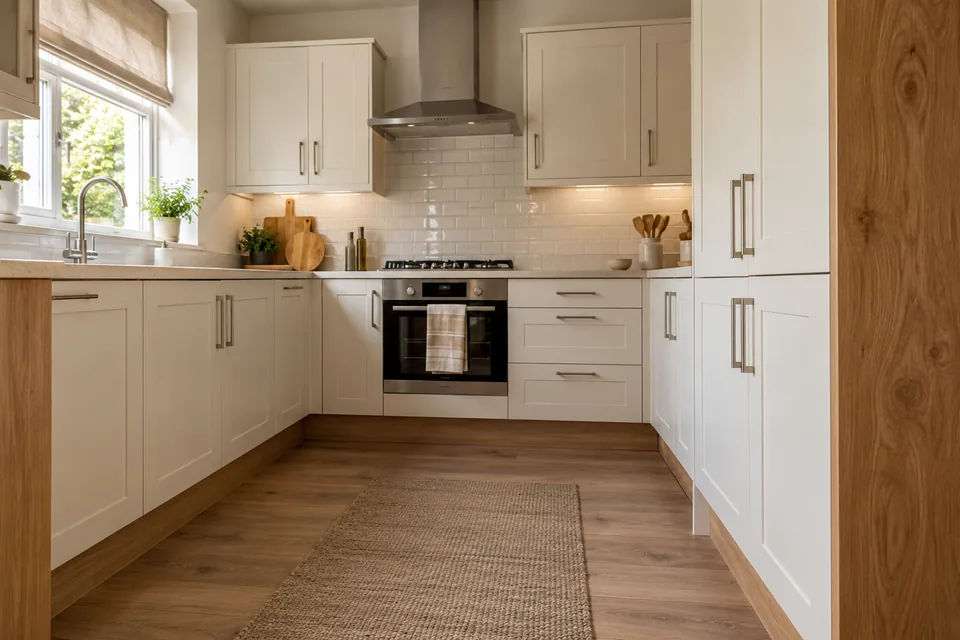
Doors are only part of what you see. End panels, filler pieces, drawer fronts and the strip beneath the cupboards, called the plinth, may all be visible. Leaving them in the old finish can look deliberate in a planned two-colour kitchen, or it can make the update feel unfinished. Decide which parts need changing before you total the cost.
Worktops and splashbacks also affect the final appearance. A new door colour that looks good alone may be less successful beside the existing tiles. Put samples together in your room. Check the edges and any exposed cabinet interiors that will remain visible when the doors open.
Our Shaker kitchen photographs show framed doors with different handles, while the traditional kitchen page shows how trim and detail affect the whole room. Use those pictures to choose a direction, without assuming the pictured products are replacement fronts for your existing units.
Compare the full cost of both options
For a door update, count every front, drawer, visible panel, handle and hinge that needs changing, then include delivery, fitting and disposal where required. Any worktop or appliance changes belong in the same budget. Ask which existing parts can stay and which would have to be altered to achieve the finish you want.
A complete kitchen quote includes a different set of work, so a direct comparison needs care. Read our new kitchen cost guide to separate products from preparation and installation. A smaller project is not automatically the better purchase if it leaves storage or layout problems you will want to change soon afterwards.
Think about disruption as well as the total. Door replacement can involve less work than removing all the units, but the actual time depends on the agreed work and compatibility. Our fitting timeline guide explains the wider stages of a full replacement.
Choose the amount of change your room needs
If appearance is the only problem, ask whether a suitable replacement-door route is available for your kitchen. If the cupboards behind the doors are damaged or the room needs a new layout, discuss a complete plan. You do not have to decide from a catalogue picture before asking for help, and you should not order fronts until their fit has been checked.
For a compact room, read how to make a small kitchen work better. For the look itself, compare Shaker, modern and handleless choices and the linked style galleries. Those decisions can be made alongside the condition and size of the room rather than in isolation.
At Kitchen Fitters Glasgow we offer kitchen design, supply and fitting, with home appointments to measure up. Send your postcode and a short description of what you want to change. Explain whether you are mainly changing the look or hoping to solve a practical problem, so the first conversation starts with the right job.